This post contains affiliate links. This means that if you click on a link in this post, we may be compensated, at no extra cost to you. Please see our Terms of Use & Privacy Policy for full details.
Supporting independence in adults with Down Syndrome looks different from supporting independence in childhood or the teenage years. As adults grow, routines become one of the most powerful tools for helping them live with confidence, predictability, and autonomy. Whether your loved one lives at home, attends a day program, works part‑time, or is transitioning into more community involvement, the right daily structure can make independence feel achievable — for them and for you.
In this guide, we’ll explore the types of routines that strengthen independence in adulthood, how to build routines that actually work, and how family caregivers can support independence without feeling overwhelmed.
Why Independence in Adults With Down Syndrome Depends on Daily Routines
Independence doesn’t happen in one big leap. It happens in small, repeatable steps that become familiar over time. This is why routines matter so much for adults with Down Syndrome.
Routines build confidence
Predictable steps help adults feel secure and capable. When they know what comes next, they participate more fully.
Routines reduce anxiety
Transitions can be stressful. A routine reduces uncertainty and helps the day feel manageable.
Routines maintain skills
Adults can lose skills if they aren’t used regularly. Routines keep important life skills active.
Routines support long‑term independence
The goal isn’t perfection — it’s consistency. A routine that works today can still work 10 years from now.
Daily Routines That Support Independence in Adults With Down Syndrome
Here are the core routines that make the biggest difference in adulthood. These are not about teaching new skills — they’re about using existing skills consistently.
1. Morning Routines
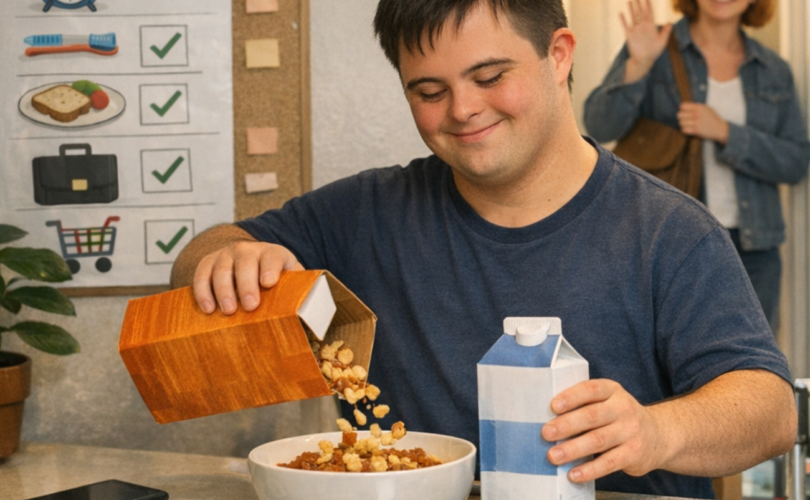
A predictable morning routine sets the tone for the entire day. Examples include:
- Wake‑up time
- Bathroom routine
- Breakfast
- Packing a bag for work or activities
- Checking a visual schedule
2. Work or Day‑Program Routines
Adults thrive when they know what to expect before, during, and after structured activities.
- Preparing for transportation
- Packing lunch
- Reviewing the day’s plan
- End‑of‑day check‑ins
3. Community Routines
Community involvement builds confidence and social skills.
- Weekly grocery trips
- Library visits
- Exercise routines
- Church or community group attendance
4. Household Routines
Adults feel proud when they contribute meaningfully at home.
- Laundry day
- Dishwashing routine
- Tidying shared spaces
- Meal prep participation
5. Evening Routines
Evenings are ideal for winding down and reinforcing independence.
- Dinner routine
- Personal hygiene
- Preparing clothes for the next day
- Relaxation activities
How to Build Routines That Strengthen Independence in Adults With Down Syndrome
Creating a routine is one thing — creating a routine that sticks is another. Here’s how to make routines work long‑term.
Start with what already works
Don’t reinvent the wheel. Build routines around existing strengths and preferences.
Use visual supports
Adults often respond well to:
- Picture schedules
- Step‑by‑step charts
- Color‑coded lists
- Timers or alarms
Keep steps simple
Break tasks into small, repeatable actions. Example: “Brush teeth” becomes:
- Put toothpaste on brush
- Brush top teeth
- Brush bottom teeth
- Rinse
Use natural cues
Instead of nagging, use:
- Alarms
- Music playlists
- Environmental cues (e.g., “When the kettle boils, it’s time to…”)
Avoid over‑helping
This is the hardest part for family caregivers. Pause before stepping in. Give time for processing. Let them try — even if it takes longer.
Troubleshooting Routine Breakdowns for Adults With Down Syndrome
Even the best routines fall apart sometimes. Here’s how to reset without frustration.
1. Identify the trigger
Was it:
- A change in schedule?
- Illness?
- Sensory overload?
- Fatigue?
- Emotional stress?
2. Reset gently
Return to the simplest version of the routine. Remove extra steps until confidence returns.
3. Adjust for seasons and holidays
Travel, visitors, and schedule changes can disrupt routines. Prepare ahead with:
- Visual countdowns
- Social stories
- Temporary modified routines
4. Celebrate small wins
Adults respond well to positive reinforcement. Acknowledge effort, not perfection.
Caregiver Corner: Supporting Independence in Adults With Down Syndrome
This is where we shift from the practical steps to the emotional reality — because supporting independence affects family caregivers differently depending on their role.
For Sibling Caregivers
Supporting independence can feel complicated when you know you may one day become the primary caregiver. You want your brother or sister to thrive, but you also carry the weight of future responsibility.
Here’s what helps:
- Build routines that don’t depend on you. Use tools, visuals, and systems that anyone can follow.
- Share responsibility with parents now. Don’t wait until you’re overwhelmed.
- Practice stepping back. Independence grows when siblings resist the urge to “just do it quickly.”
- Think long‑term, not perfect. A routine that works 70% of the time is still a win.
For Parents/Other Family Caregivers
Letting go is emotional. You’ve spent years helping, guiding, and protecting. Stepping back can feel like you’re abandoning your child — even when you know independence is important.
Here’s what helps:
- Give extra processing time. Adults often need more time than you expect.
- Let them struggle safely. Struggle is part of learning.
- Avoid doing everything because it’s faster. Faster is not the goal — independence is.
- Celebrate effort, not speed. Independence grows slowly and steadily.
A Gentle Resource for You
Supporting independence in adults with Down Syndrome is a long‑term journey — and family caregivers deserve tools that make that journey lighter, clearer, and more sustainable. If you’re looking for practical guidance or emotional support, these books by Alicia Buckley (founder of HappyDowns) can help:
📘 The MUST‑HAVE GUIDE for SIBLING CAREGIVERS
A compassionate, practical guide for siblings who want to support their brother or sister with confidence — without feeling overwhelmed by future responsibility.
📗 Important Information Organizer for Family Caregivers
A structured, easy‑to‑use organizer that helps families document essential information, routines, medical details, and long‑term plans — a perfect companion to building independence.
📙 Sibling Caregiver Venting Journal
A safe, private space for siblings to release emotions, process stress, and stay grounded while supporting a loved one with Down Syndrome.
These resources are designed to support you — whether you’re a parent, a sibling, a grandparent, an aunt, an uncle, or a future guardian — as you help your loved one build a life filled with dignity, structure, and independence.